Syrebo’s 32-Channel واجهة الدماغ والحاسوب Hand روبوت إعادة التأهيل Begins Clinical Application At Huashan Hospital
Syrebo is proud to announce that its latest 32-channel واجهة الدماغ والحاسوب (BCI) إعادة التأهيل system has officially begun clinical application at Huashan Hospital, one of China's leading neurological إعادة التأهيل hospitals.
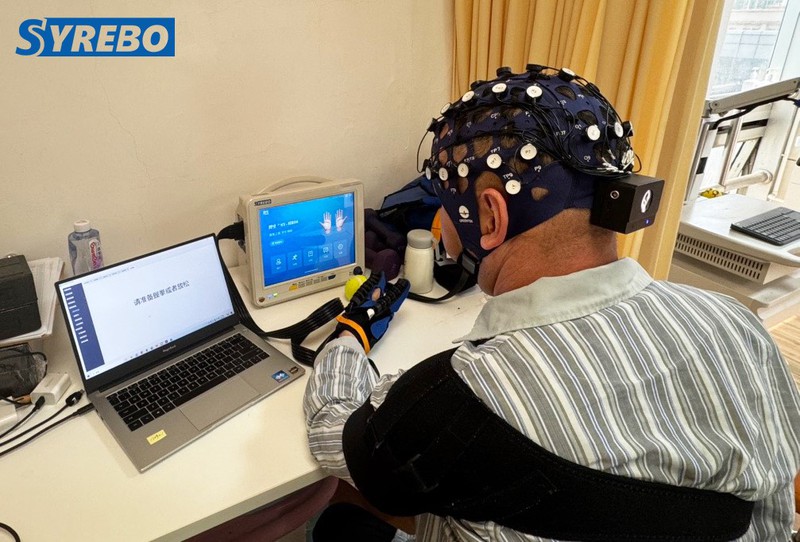
This milestone marks another important step forward in the integration of advanced neurotechnology into clinical إعادة التأهيل practice. The introduction of Syrebo's 32-channel BCI system aims to support more precise and effective neurorehabilitation training for patients with neurological disorders, including السكتة الدماغية and brain injury.
Compared with traditional إعادة التأهيل approaches, واجهة الدماغ والحاسوب technology enables direct communication between brain signals and إعادة التأهيل devices, helping patients actively participate in motor recovery training through neural intention recognition. As BCI-assisted إعادة التأهيل continues to gain attention worldwide, it is increasingly becoming an important part of modern neurorehabilitation.
Syrebo's 32-channel BCI system features enhanced signal acquisition capability and improved training responsiveness, providing richer brain signal collection and more stable إعادة التأهيل interaction during therapy sessions. Compared with traditional BCI systems, the 32-channel configuration enables more precise brain signal monitoring and improved training performance. The system adopts dry electrode technology for a more convenient wearing experience, significantly reducing therapist preparation time and shortening calibration time before training sessions.
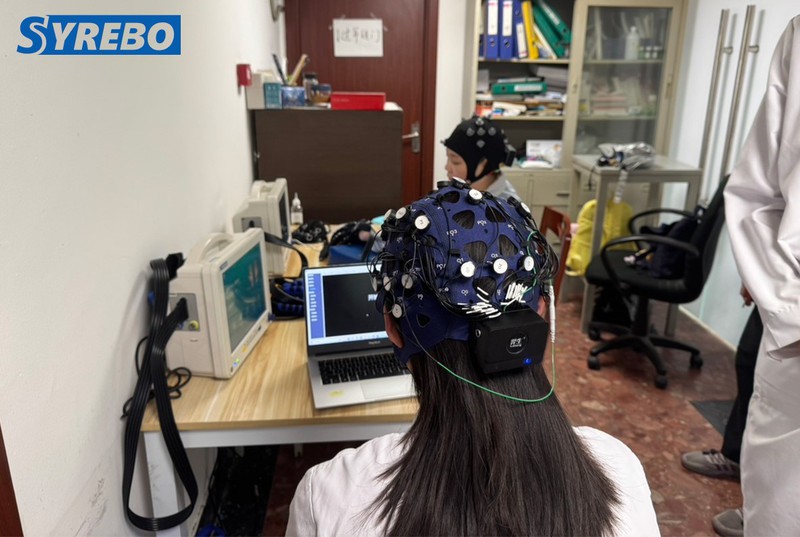
As Syrebo continues to collaborate with hospitals, إعادة التأهيل centers, and research institutions worldwide, the company remains dedicated to making advanced إعادة التأهيل technologies more accessible and effective for patients globally.